
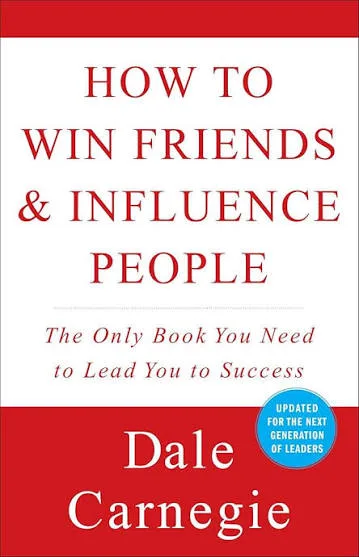
Most people file How to Win Friends and Influence People under charm tips. Smile more. Remember names. Be nice.
That reading misses the point. Dale Carnegie published the book in 1936, and it has outlasted almost every business book since because it isn't really about charm. It's about one uncomfortable fact: people act on their own interests and protect their own self-image. Your logic comes a distant third. Every principle in the book is a way of working with that fact instead of fighting it.
This How to Win Friends and Influence People summary skips the long list of principles and keeps the vital few: the ones that change how people respond to you this week.
Stop criticising. It never works the way you think.
Carnegie opens with his hardest rule: don't criticise, condemn or complain.
Not because criticism is rude. Because it fails. Criticism puts people on the defensive, and a defensive person spends their energy justifying themselves, not changing. Carnegie's point is that almost nobody sees themselves as the villain of their own story. When you attack, they don't hear a lesson. They hear an attack.
The replacement is honest, specific appreciation. Not flattery, which people smell instantly. Carnegie draws that line again and again: real recognition of something the person actually did well. Appreciation gives people a standard to live up to. Criticism gives them a reason to prove you wrong.
Apply it: the next time someone on your team gets something wrong, open with what they got right, specifically, before you raise the problem. Then present the problem as something easy to fix. Watch how much faster it gets fixed.
Talk about what they want, not what you want
The second fundamental is the one most readers nod at and never use: arouse in the other person an eager want.
Everyone is tuned to the same station: their own interests. Your reasons for wanting something are irrelevant to them. The reliable way to move someone is to show them how the thing you want gets them something they already want.
This is sales, management and parenting compressed into one line. A pitch that opens with "we're an award-winning agency" is about you. One that opens with "you're losing jobs to the competitor with more reviews" is about them.
Apply it: before any important ask (a raise, a deal, a favour), write down what the other person gets out of it. If you can't name it, you're not ready to ask.
Be interested, not interesting
Carnegie's six ways to make people like you all point the same way: make the other person the centre of the conversation.
- Become genuinely interested in other people.
- Smile.
- Remember their name. Carnegie calls a person's name the sweetest sound in any language to them.
- Be a good listener and encourage them to talk about themselves.
- Talk in terms of their interests.
- Make them feel important, and mean it.
The operative word is genuinely. The book is often read as a manipulation manual, but faked interest backfires, and Carnegie insists on sincerity throughout. The real insight is scarcity: curiosity is rarer than cleverness, so it's remembered longer. People forget what you said. They remember that you listened.
Apply it: in your next three conversations, ask one more follow-up question than feels natural. Say nothing about yourself until you're asked.
Join the free list for new syntheses.
One book's 20%, with the prompts to apply it.
Free. No spam.
You can't win an argument
The third part of the book is about changing minds, and it opens with a rule that sounds like surrender: the only way to get the best of an argument is to avoid it.
Win the argument and you lose the person. They're now less likely to agree, because agreeing means admitting they were wrong in front of you. Carnegie's alternatives are the opposite of debating:
- Never say "you're wrong." Show respect for their view, even when you disagree with it.
- If you're wrong, admit it fast, before they can point it out. It disarms the whole exchange.
- Get early yeses. Start with what you agree on. Momentum is psychological.
- Let them do most of the talking. People trust conclusions they reach themselves.
- Let the idea feel like theirs. Plant it, ask questions, and let them arrive.
This is the section that pays most for founders and consultants, because so much of the job is getting a client to adopt an idea they pushed back on at first.
Leadership is changing people without resentment
The final part applies everything to leading people. Every principle protects the other person's pride while still changing the behaviour:
- Begin with praise and honest appreciation.
- Call attention to mistakes indirectly, and talk about your own mistakes first.
- Ask questions instead of giving direct orders.
- Let the other person save face.
- Praise every improvement, even the small ones.
- Give people a fine reputation to live up to.
The thread through all of it: people defend their self-image before anything else. Lead in a way that lets them keep it, and they'll change almost anything else.
What's dated, and what isn't
Two honest caveats. The examples come from another era: salesmen, factory managers, letters. The principles survive; the stories need translating. And read carelessly, the book becomes a script for faking warmth. That version doesn't last. The techniques amplify genuine interest. They can't replace it.
Do this today
- Swap one criticism for specific appreciation before you raise the problem.
- Write down what the other person wants before your next important ask.
- Ask one extra follow-up question in every conversation today.
- Drop one argument you were about to win. Ask a question instead.
- Use people's names, and write down the names of everyone you met this week.
Treat each principle like a habit: one at a time, small enough to do daily, until it runs without thinking. The Atomic Habits summary covers how to make that stick.
3 prompts to go deeper
- "Here's a request I need to make: [describe it]. Rewrite it so it leads with what the other person wants."
- "I need to give this feedback: [describe it]. Reframe it using Dale Carnegie's leadership principles."
- "Where in my work am I trying to win arguments instead of letting people reach the conclusion themselves?"
FAQ
What is the main idea of How to Win Friends and Influence People?
People act on their own interests and protect their self-image. Carnegie's principles work with that instead of against it: appreciate instead of criticise, frame requests around what the other person wants, show genuine interest, and avoid arguments so people can change their minds without losing face.
What are the parts of How to Win Friends and Influence People?
The modern edition has four: fundamental techniques in handling people, six ways to make people like you, how to win people to your way of thinking, and how to be a leader who changes people without giving offence or arousing resentment.
Is How to Win Friends and Influence People still relevant?
Yes. The examples are dated; the psychology isn't. Defensiveness, self-interest and the need to save face work the same way in a Slack thread as they did in a 1930s sales office.
Who wrote How to Win Friends and Influence People?
Dale Carnegie. It was first published in 1936.
Run it, don't just read it
A summary tells you what the book says. The value comes from applying one principle at a time until it's automatic. For a worked example of turning a book into a system, the free Atomic Habits Action Vault shows the method: the 20% of the book, plus workbooks and prompts you actually run. Then try the free tools. The Lifetime Reading Calculator shows why the next book you pick matters.
For the darker side of the same subject, read the 48 Laws of Power summary. For the long game of working with people, see the 7 Habits of Highly Effective People summary.
It's on our lists of the best books for entrepreneurs, best books for content creators, best books for consultants and best books for managers. For the negotiation side of influence, read the Never Split the Difference summary.
The next synthesis, the week it drops.
Distilled, not summarized. Free.
Free. No spam.