
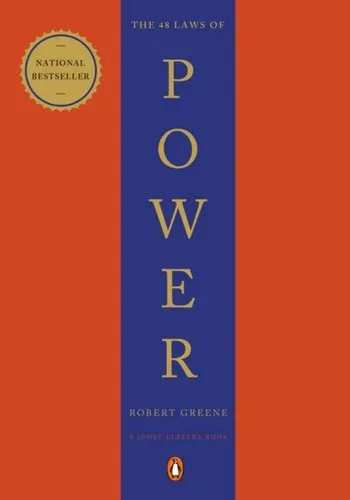
The 48 Laws of Power reads like a handbook for villains. Conceal your intentions. Crush your enemy totally. Keep people dependent on you. Plenty of readers put it down feeling slightly unclean.
That's the wrong takeaway. Robert Greene's 1998 book is built from centuries of history (courtiers, kings, con artists and generals) and its real value isn't the tactics. It's that once you've read it, you can see the game being played around you, in offices, negotiations and families, and stop being the person it's played on.
This 48 Laws of Power summary keeps the 20% worth knowing: the patterns underneath the laws, how to use them defensively, and the full list in short form.
What the book is really about
Greene's thesis is blunt: power is social, it's always present, and it's amoral. Every group of people has a hierarchy, and everyone is positioning within it, whether they admit it or not. The book's recurring image is the royal court, where survival depended on reading people, controlling what you revealed, and never threatening the person at the top.
The structure matters more than most summaries admit. Each law comes with a story of someone who broke it, a story of someone who used it, and a reversal: the conditions in which the law should be broken. Greene isn't handing out commandments. He's describing forces, and forces have exceptions.
The 20%: five patterns behind the 48 laws
Most of the 48 laws are variations on a handful of ideas. Learn these and the rest fall into place.
1. Reputation is the cornerstone. Law 5 says to guard your reputation with your life, and Law 6 says to court attention. Reputation does your work before you arrive, and a damaged one takes years to rebuild. It's the same reason the Almanack of Naval Ravikant puts accountability, building under your own name, beside leverage. Use it: decide what you want to be known for, and protect it in small moments, not only big ones.
2. Say less than necessary. Laws 3 and 4 are about concealing intentions and talking less. The more you say, the more you reveal and the more likely you are to say something foolish. Silence makes people fill the gap. Use it: in your next negotiation, state your position once, then stop talking.
3. Never outshine the master. Law 1 warns against making the people above you feel insecure. Talent that threatens a boss gets sidelined, not promoted. Use it: make your manager or client look good in public, and let your results speak in private.
4. Win through actions, not argument. Law 9 is the same insight as Dale Carnegie's: winning an argument creates resentment. Demonstrate instead of debating. Use it: build the prototype instead of arguing for the idea.
5. Timing and formlessness. Law 35 is to master timing, Law 47 is to know when to stop, and Law 48 is to stay adaptable. Rigid plans and overreaching after a win are how most power is lost. Use it: when you've got the outcome you aimed for, take it and stop pushing.
Join the free list for new syntheses.
One book's 20%, with the prompts to apply it.
Free. No spam.
Use it defensively: recognise the play
The most practical way to read Greene is backwards. Each law tells you what someone might be doing to you.
- Generosity with strings attached. Law 12 describes disarming people with selective honesty and gifts. Be wary of favours that arrive just before a request.
- The friend who's gathering information. Law 14 is "pose as a friend, work as a spy". Notice who asks a lot of questions and shares little.
- Engineered dependence. Law 11 is about keeping people dependent. If one person controls a skill or relationship your business needs, that's a risk, not loyalty.
- The free lunch. Law 40 says to despise free things, because free often carries a hidden obligation.
- Isolation. Law 18 warns that isolation is dangerous. Leaders who stop hearing bad news are already losing power.
Where the book falls short
Greene describes zero-sum games well. Most of modern work and business is positive-sum. Trust compounds, and reputations travel faster than they did at court. Several laws, used repeatedly, burn the very reputation that Law 5 tells you to guard. Treat the book as a guide to understanding power, then pair it with How to Win Friends and Influence People for the long game.
The 48 laws, in short form
- Never outshine the master.
- Never put too much trust in friends; learn to use enemies.
- Conceal your intentions.
- Always say less than necessary.
- Guard your reputation with your life.
- Court attention at all costs.
- Get others to do the work, but take the credit.
- Make other people come to you.
- Win through actions, never through argument.
- Avoid the unhappy and unlucky.
- Keep people dependent on you.
- Use selective honesty and generosity to disarm.
- Appeal to self-interest, never to mercy or gratitude.
- Pose as a friend, work as a spy.
- Crush your enemy totally.
- Use absence to increase respect.
- Cultivate an air of unpredictability.
- Don't build fortresses; isolation is dangerous.
- Know who you're dealing with.
- Don't commit to anyone.
- Seem dumber than your mark.
- Use the surrender tactic.
- Concentrate your forces.
- Play the perfect courtier.
- Re-create yourself.
- Keep your hands clean.
- Play on people's need to believe.
- Enter action with boldness.
- Plan all the way to the end.
- Make your accomplishments seem effortless.
- Control the options.
- Play to people's fantasies.
- Discover each person's thumbscrew.
- Act like royalty to be treated like it.
- Master the art of timing.
- Disdain things you cannot have.
- Create compelling spectacles.
- Think as you like, but behave like others.
- Stir up waters to catch fish.
- Despise the free lunch.
- Avoid stepping into a great man's shoes.
- Strike the shepherd and the sheep will scatter.
- Work on the hearts and minds of others.
- Disarm and infuriate with the mirror effect.
- Preach change, but never reform too much at once.
- Never appear too perfect.
- In victory, learn when to stop.
- Assume formlessness.
Do this today
- Audit your reputation. Write down the one thing you want to be known for at work, and one recent moment that undercut it.
- Talk less in your next meeting. Make your point once, then listen.
- Make someone above you look good this week, publicly.
- Spot one play. Look back at a deal or decision that went against you and name the law that was used.
3 prompts to go deeper
- "Here's a situation at work: [describe it]. Which of the 48 Laws of Power are being played, and by whom?"
- "I'm entering this negotiation: [describe it]. What would Robert Greene say I'm revealing too early?"
- "Which laws would damage my reputation if I used them, and what's the trust-building alternative?"
FAQ
What is the 48 Laws of Power about?
It's a study of how power works between people, drawn from history. Each law is illustrated with figures who broke it and figures who used it, and most come with a reversal: the situations where the law backfires.
What are the 48 laws of power?
The full list is above, in short form. The most useful ones to know are never outshine the master, say less than necessary, guard your reputation, win through actions rather than argument, and know when to stop.
Is The 48 Laws of Power worth reading?
Yes, if you read it as a map of how other people operate rather than a script to follow. It sharpens your ability to recognise manipulation. Used as a playbook, many of the laws erode the trust that long careers depend on.
Who wrote The 48 Laws of Power?
Robert Greene, produced with Joost Elffers. It was first published in 1998.
Run it, don't just read it
A summary tells you what the book says. The value comes from noticing one pattern at a time in your own life. For a worked example of turning a book into a system you actually use, see the free Atomic Habits Action Vault, or try the free tools. If you'd rather build influence by building skill, the 10,000-hour calculator shows how long mastery really takes at your pace.
It's on our lists of the best books for entrepreneurs and best books for consultants. For a way to win negotiations through empathy rather than manipulation, see the Never Split the Difference summary.
The next synthesis, the week it drops.
Distilled, not summarized. Free.
Free. No spam.