
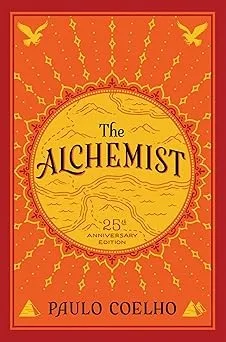
The Alchemist is a novel, not a self-help book, but people read it like one. Paulo Coelho first published it in Portuguese in 1988, and it went on to become one of the most widely translated books by a living author. It's short, it reads like a fable, and its central idea is easy to carry around: the thing you most want to do is worth pursuing, and the pursuit itself changes you.
This summary gives you the story in brief, then the handful of lessons that hold up once you close the book.
What is The Alchemist about?
The dream
Santiago is a young shepherd in Andalusia, in southern Spain. He chose to travel with his sheep rather than become a priest, as his parents hoped. He keeps having the same dream: a child takes him to the Egyptian pyramids and tells him he'll find treasure there.
A fortune-teller tells him the dream means what it says. Then an old man who calls himself Melchizedek, the king of Salem, explains the idea at the heart of the book: everyone has a Personal Legend, the thing they've always wanted to accomplish, and when you pursue it, the world helps you. He gives Santiago two stones, Urim and Thummim, to help him read signs, and tells him to follow the omens.
Tangier and the crystal merchant
Santiago sells his sheep and crosses to Tangier in North Africa, where he's robbed on his first day. With nothing left, he starts working for a crystal merchant. His ideas grow the shop, and after about a year he has enough money to go home and buy a bigger flock.
The merchant is the book's warning. He has always dreamed of the pilgrimage to Mecca, and he deliberately never goes, because he fears that achieving the dream would leave him with nothing to live for. Santiago decides not to become him, and joins a caravan crossing the Sahara.
The desert and the oasis
On the caravan he meets an Englishman who is trying to learn alchemy from books. The caravan reaches an oasis, where Santiago falls in love with Fatima, a woman of the desert. He sees an omen in two hawks fighting, warns the tribal chieftains of an attack, and is proved right.
That brings him to the alchemist, who becomes his teacher. The alchemist pushes him to keep going and teaches him to listen to his heart. Fatima tells him to go too: she'll wait, because she knows the journey is his.
The pyramids, and the twist
On the way, Santiago and the alchemist are captured by warring tribesmen, and Santiago has to prove his worth by turning himself into the wind. It's the most mystical part of the book, and it's about understanding what Coelho calls the Soul of the World.
When Santiago finally reaches the pyramids and starts digging, he's attacked and robbed. One of the robbers mocks him: he once dreamed of treasure buried in a ruined church in Spain, under a sycamore tree, and he wasn't foolish enough to cross a desert for a dream. It's the church where Santiago used to sleep with his sheep. He goes home, digs, and finds the treasure, then sets off to return to Fatima.
The lessons that hold up
1. Name your Personal Legend
The book's starting point is that most people know, as children, what they want to do with their life, and then talk themselves out of it. Coelho's term is romantic, but the practical version is simple: write down the thing you'd do if you weren't worried about how it looked.
Apply it: write one sentence that starts "If nothing stopped me, I would…". Keep it where you'll see it.
2. Fear of failing is the real obstacle
The crystal merchant isn't stopped by failure. He's stopped by fear, and by comfort. Coelho's point is that the fear of suffering is worse than the suffering itself, and that the dream you never test can't disappoint you, which is exactly why it never happens.
Apply it: name the smallest step toward your goal that you've been avoiding, and the specific fear behind it.
3. Read the omens, and act on them
Santiago keeps going because he notices signs and acts on them. Take away the mysticism and it's a habit worth having: pay attention to what's actually happening, take the small opening when it appears, and adjust.
Join the free list for new syntheses.
One book's 20%, with the prompts to apply it.
Free. No spam.
4. The journey is part of the treasure
Santiago ends up exactly where he started, but he isn't the same person. He learns trade in Tangier, patience in the desert and courage in front of the chieftains. Coelho's structure makes the point: he could only find the treasure at home after making the trip.
Apply it: when a project stalls, list what it has already taught you. That learning is part of the return.
5. Love doesn't require giving up the path
Fatima doesn't ask Santiago to stay. The book's view of love is that it supports the Personal Legend rather than competing with it. It's one of the more grounded ideas in the story.
How to read it
The Alchemist is a fable, so it works through symbols, and some of its language about the universe helping you is better read as encouragement than as a promise. Treat it as a prompt to ask what you're putting off, not as a plan.
Do this today
- Write your one sentence: "If nothing stopped me, I would…"
- Name the step you're avoiding and the fear behind it.
- Take one small step before the end of the week.
- List what your current project has already taught you.
3 prompts to go deeper
- "Here's what I'd do if nothing stopped me: [describe it]. Help me find the smallest test I could run this month."
- "I keep putting off [goal] because [reason]. Is this a real constraint or the crystal merchant's fear?"
- "What signs in my current work suggest I should change direction, and which ones suggest I should keep going?"
FAQ
What is The Alchemist about?
A young Andalusian shepherd, Santiago, dreams of treasure at the Egyptian pyramids and travels across North Africa and the Sahara to find it. Along the way he learns about his Personal Legend, love and fear, and discovers the treasure was buried back where he started.
Who wrote The Alchemist?
Paulo Coelho, a Brazilian novelist.
When was The Alchemist written?
It was first published in Portuguese in 1988, as O Alquimista. The English translation followed in the early 1990s.
Is The Alchemist a Christian book?
Not in a narrow sense. It draws on Christian, Jewish and Islamic ideas, including Melchizedek and the Urim and Thummim from the Hebrew Bible and the Arabic idea of "maktub", it is written. It's best read as a spiritual fable about purpose rather than a religious text.
Run it, don't just read it
The Alchemist is about starting. To make the first step stick, read the Atomic Habits summary. For a sense of how much time you really have to pursue it, try the life clock, and for how long the skill itself might take, the 10,000-hours calculator. For a more inward take on the same journey, read the Power of Now summary.
For four rules to quieten the fear that stops you starting, read the Four Agreements summary. For dealing with change when it arrives uninvited, see the Who Moved My Cheese summary.
The next synthesis, the week it drops.
Distilled, not summarized. Free.
Free. No spam.