
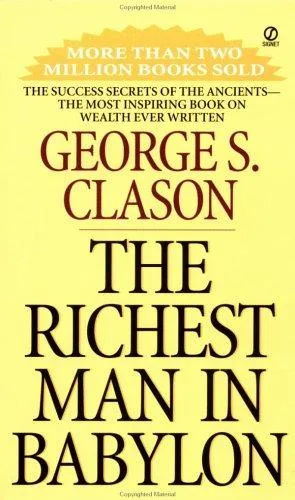
The Richest Man in Babylon is a collection of short parables about money, set in ancient Babylon. George S. Clason wrote them as pamphlets in the 1920s, and they were collected into a book in 1926. It's still recommended a century later because its rules are simple, specific and hard to argue with.
The stories follow ordinary Babylonians, such as a chariot builder and a musician who are tired of being broke, as they learn from Arkad, the richest man in the city, and from moneylenders, traders and a former slave. Strip out the setting and you get a short course in personal finance.
This summary covers the two lists at the heart of the book and the advice that still applies.
What is The Richest Man in Babylon about?
Two friends, Bansir the chariot builder and Kobbi the musician, realise they've worked hard all their lives and have nothing to show for it. They go to their childhood friend Arkad, now the richest man in Babylon, and ask how he did it.
Arkad's answer is the line the whole book rests on: a part of all you earn is yours to keep. He learned it from a moneylender named Algamish. Most people pay everyone else first (the baker, the landlord, the merchant) and keep nothing for themselves. Arkad started keeping at least a tenth.
The later stories expand the lesson: how to lend wisely, how to get out of debt, how luck favours people who act, and why a steady job and a plan beat a get-rich-quick scheme.
The seven cures for a lean purse
Arkad is asked to teach the city. His seven cures are:
- Start thy purse to fattening. Save at least one coin in every ten you earn.
- Control thy expenditures. Budget so that your necessary expenses don't grow to swallow everything you earn.
- Make thy gold multiply. Put your savings to work so they earn more.
- Guard thy treasures from loss. Protect your savings by investing only where your principal is safe and you can reclaim it.
- Make of thy dwelling a profitable investment. Own your home rather than paying rent forever.
- Insure a future income. Provide for your old age and for your family.
- Increase thy ability to earn. Keep learning and improving your skills.
Apply it: set up an automatic transfer of at least 10% of your income to savings on payday, before you spend anything.
Join the free list for new syntheses.
One book's 20%, with the prompts to apply it.
Free. No spam.
The five laws of gold
In another parable, Kalabab tells the story of Arkad's son, Nomasir, who is sent out with a bag of gold and a clay tablet carved with five laws. He loses the gold by ignoring the laws, then rebuilds his fortune by following them. In plain English:
- Gold comes to people who save at least a tenth of their earnings for their own future and their family's.
- Gold works for people who put it to profitable use, multiplying like flocks in a field.
- Gold stays with careful owners who invest it on the advice of people experienced with it.
- Gold slips away from people who invest in things they don't understand or that experienced people wouldn't approve of.
- Gold flees from people who chase impossible returns or follow the advice of tricksters, or their own inexperience.
Apply it: before your next investment, write one sentence explaining how it makes money. If you can't, law four applies.
Debt, luck and work
Three more parables earn their place:
- Getting out of debt. Dabasir the camel trader, once a slave, escapes debt with a simple plan from a set of clay tablets: live on most of what you earn, save a tenth, and use a fixed share of the rest to repay creditors steadily. The exact split matters less than the principle: a plan, followed every pay period, beats hoping.
- Luck. The book argues that luck favours people who act on opportunities, and that procrastination is what makes most people miss them.
- Work. A recurring theme is pride in work. Steady effort and a growing skill are the base everything else is built on.
What to adjust for today
The book's principles hold up, but read a few with today's context. "Own your home" is a lifestyle and market decision, not automatically the best investment everywhere. And "invest on wise advice" today means low-cost, diversified investments and checking whether an adviser is paid to sell to you. The underlying rules (save first, spend less than you earn, avoid what you don't understand) haven't aged at all.
Do this today
- Automate 10% of your income into savings on payday.
- Write your monthly necessary expenses, and check they're not creeping up.
- Explain each investment in one sentence, or reconsider it.
- Book one hour this week to grow a skill that raises your income.
3 prompts to go deeper
- "Here's my monthly income and spending: [list them]. Help me build a budget that keeps at least 10% for myself first."
- "I'm considering this investment: [describe it]. Check it against the five laws of gold."
- "I have these debts: [list them]. Build me a steady repayment plan that still saves something every month."
FAQ
What is The Richest Man in Babylon about?
It's a collection of parables about money set in ancient Babylon. Through characters like Arkad, the richest man in the city, it teaches basic wealth principles: save at least a tenth of what you earn, control spending, invest carefully, avoid schemes and increase your earning power.
What are the seven cures for a lean purse?
Start saving at least a tenth of your income, control your expenses, make your savings multiply, guard them from loss, make your home a profitable investment, insure a future income, and increase your ability to earn.
When was The Richest Man in Babylon written?
George S. Clason wrote the parables as pamphlets in the 1920s, and they were collected into a book in 1926.
Is The Richest Man in Babylon a good book?
Yes, for anyone starting out with money. It's short, the rules are clear, and the core advice, pay yourself first and avoid what you don't understand, is as relevant now as it was a century ago.
Run it, don't just read it
Start with the 10% rule this week. For how money behaviour beats money knowledge, read the Psychology of Money summary. For assets versus liabilities, see the Rich Dad Poor Dad summary, and for building long-term wealth with leverage, the Almanack of Naval Ravikant summary. This summary isn't financial advice; check your own situation before you act.
The next synthesis, the week it drops.
Distilled, not summarized. Free.
Free. No spam.